Featured Work
 Mobile App Redesign B2B2C
DaySmart Recreation
Mobile App Redesign B2B2C
DaySmart Recreation
Context & The Problem Space
DaySmart Recreation operates in an increasingly competitive B2B2C SaaS market. Our legacy application suffered from an outdated user experience with severely limited mobile functionality. This friction led to significant drop-off rates during critical customer workflows, specifically account registration and facility checkout.
Strategic Approach & Discovery
Before moving to pixels, I needed to define the exact points of failure. My strategy involved:
- Quantitative Analysis: Leveraged Google Analytics to track user behavior, pinpointing the exact stages in the conversion funnels where mobile users were abandoning the process.
- Qualitative Research: Conducted in-depth user interviews with both facility managers (SMBs/Enterprise) and their end-customers to understand pain points, formulating clear problem statements to prioritize design challenges.
Process & Execution
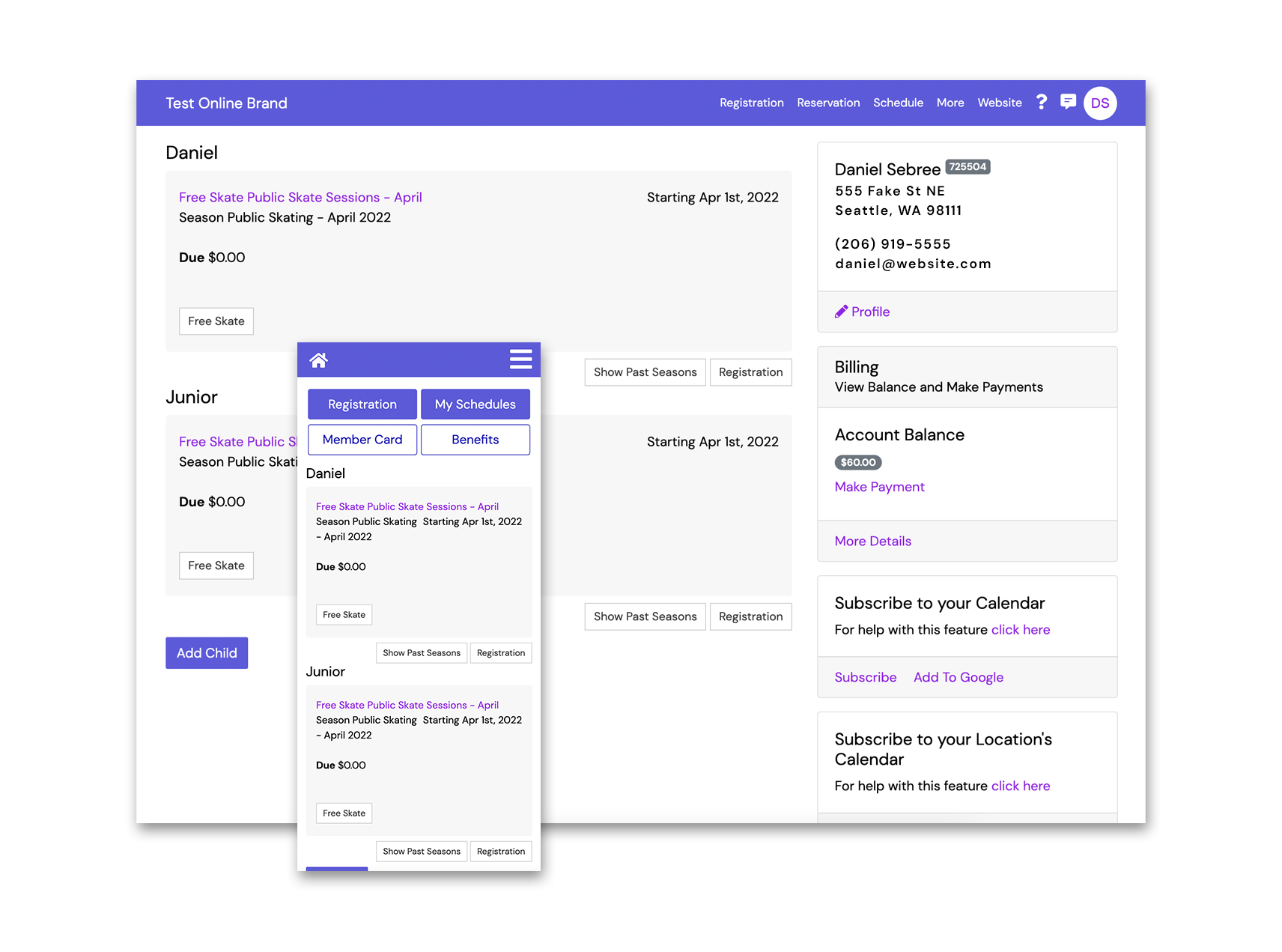
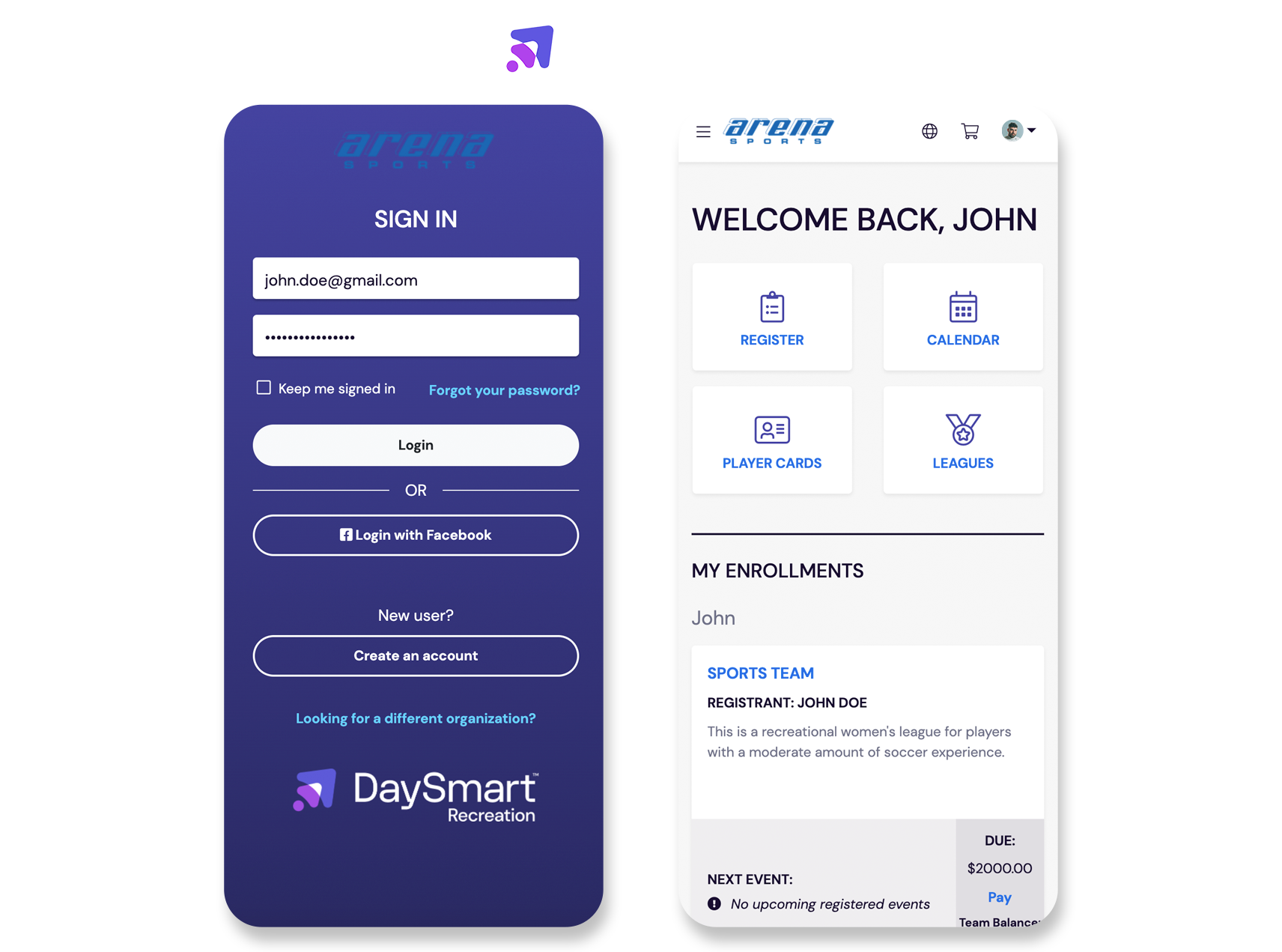
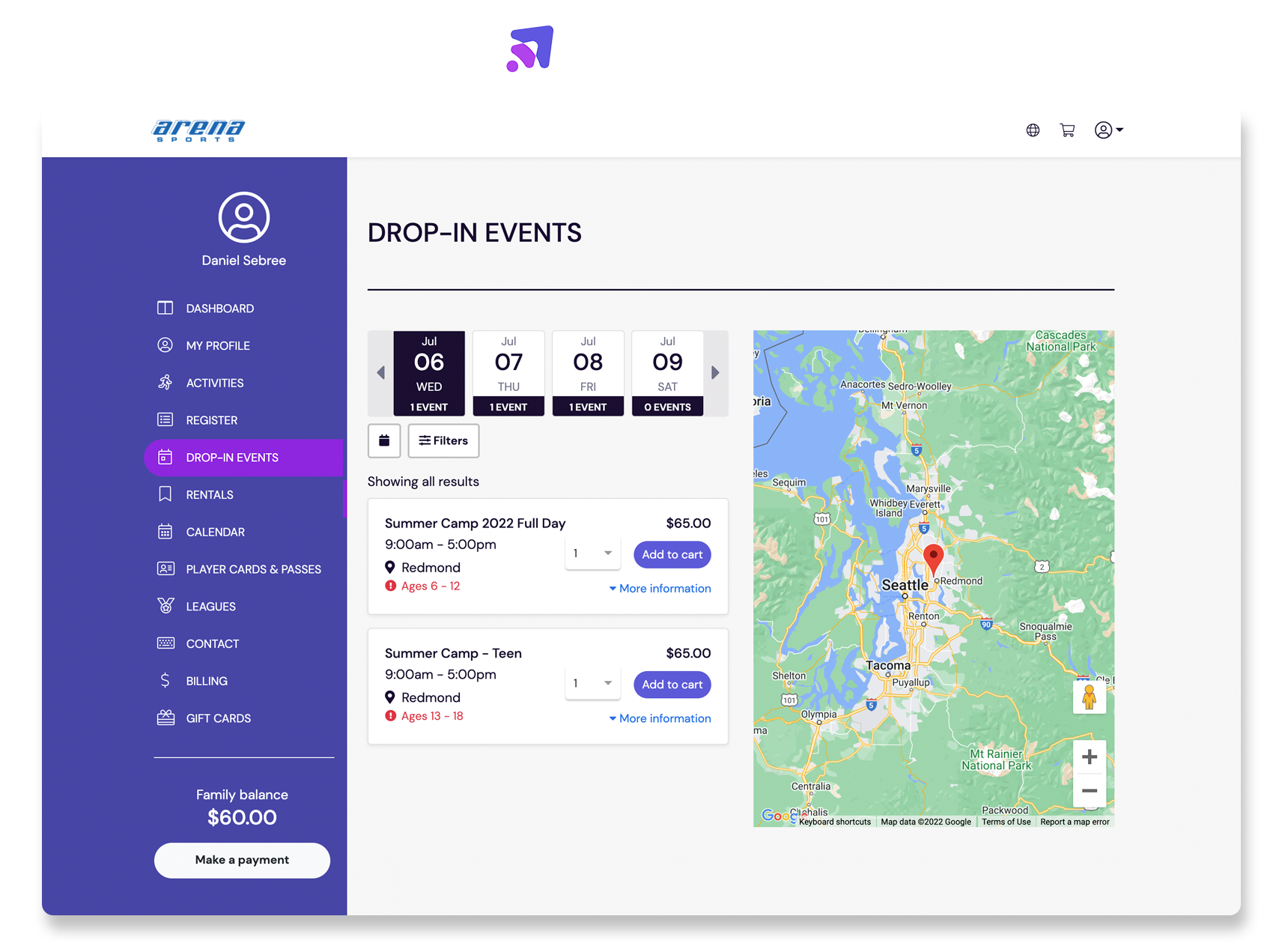
I led the end-to-end modernization of the application, prioritizing a mobile-first architecture. This involved generating multiple design concepts, mapping new interaction flows, and restructuring the information hierarchy to enhance user findability across devices.
I built low-fidelity wireframes followed by high-fidelity interactive prototypes to validate our assumptions. A major component of the execution involved deep cross-functional collaboration with engineering and product teams to ensure the new visually appealing design system aligned with technical constraints and brand identities.
Impact & Outcomes
By simplifying the registration setup and clarifying checkout steps to build trust, the redesigned application fundamentally improved the product's performance metrics.
- Achieved a 20% increase in mobile user adoption through responsive design.
- Improved core conversion rates by 5% across the platform.
- Established a reusable, scalable design system that drastically increased efficiency for future engineering projects.
 AI-Accelerated Churn Mitigation
DaySmart Software
AI-Accelerated Churn Mitigation
DaySmart Software
Context & The Problem Space
Several high-value enterprise accounts were flagged as severe churn risks due to specific workflow inefficiencies and UI friction points. However, core engineering sprints were entirely committed to existing roadmap initiatives. We faced a critical roadblock: waiting for traditional development cycles meant likely losing these major clients.
Strategic Approach
I recognized this required a strong bias for action. I needed a way to deliver production-ready solutions without taxing the engineering team. I established a rapid-response triage workflow, partnering directly with Customer Experience (CX) teams via Slack to capture raw feedback and utilizing ProductBoard to isolate the highest-impact "quick wins."
Process & Execution
Instead of generating Figma prototypes that would sit in a backlog, I blurred the lines between design and engineering. Leveraging Claude Code, I took full ownership of the implementation. Guided by my strong foundation in mobile-first front-end architecture, I was able to rapidly prompt, review, and refine the front-end code, bypassing the traditional design-handoff bottleneck entirely.
Impact & Outcomes
By leveraging AI as a force multiplier, I executed critical updates in a fraction of the standard timeframe.
- Shipped targeted UI solutions outside the standard sprint cycle directly to production.
- Resolved critical pain points for at-risk enterprise accounts, successfully mitigating churn.
- Proved the viability of an AI-accelerated product development lifecycle, demonstrating how design can deliver immediate business value independently.
AI-Ready Figma Design System
DaySmart Software
Context & The Problem Space
As we increasingly integrated AI coding agents into our development workflows, a new bottleneck emerged. Our existing Figma design system, while visually consistent for humans, lacked the strict semantic structure required for AI agents (like Claude and Cursor) to accurately interpret and generate production-ready UI components.
Strategic Approach
I initiated a project to bridge the gap between human design intent and AI comprehension. I analyzed the specific prompting failures and structural gaps that caused AI agents to hallucinate or break layout constraints. The solution required migrating from a traditional UI kit to a highly structured, token-driven approach optimized explicitly for LLM consumption.
Process & Execution
I systematically audited and restructured the Figma design system from the ground up. I leveraged Claude to help write comprehensive, machine-readable documentation defining strict design tokens, standardized component behaviors, and explicit layout rules. I created robust guidelines that translated visual design choices into clear, prompt-ready context windows for front-end generation.
Impact & Outcomes
This initiative fundamentally evolved how our team moves from design to code.
- Transformed a standard UI kit into a fully AI-operable framework.
- Drastically reduced the time required to generate accurate, brand-aligned UI code for new features.
- Established a new standard for how modern design systems can empower engineering in an AI-forward development cycle.